
S Series Coatings That Protect, Enhance, and Extend

Precision Engineering for Durability and Clarity
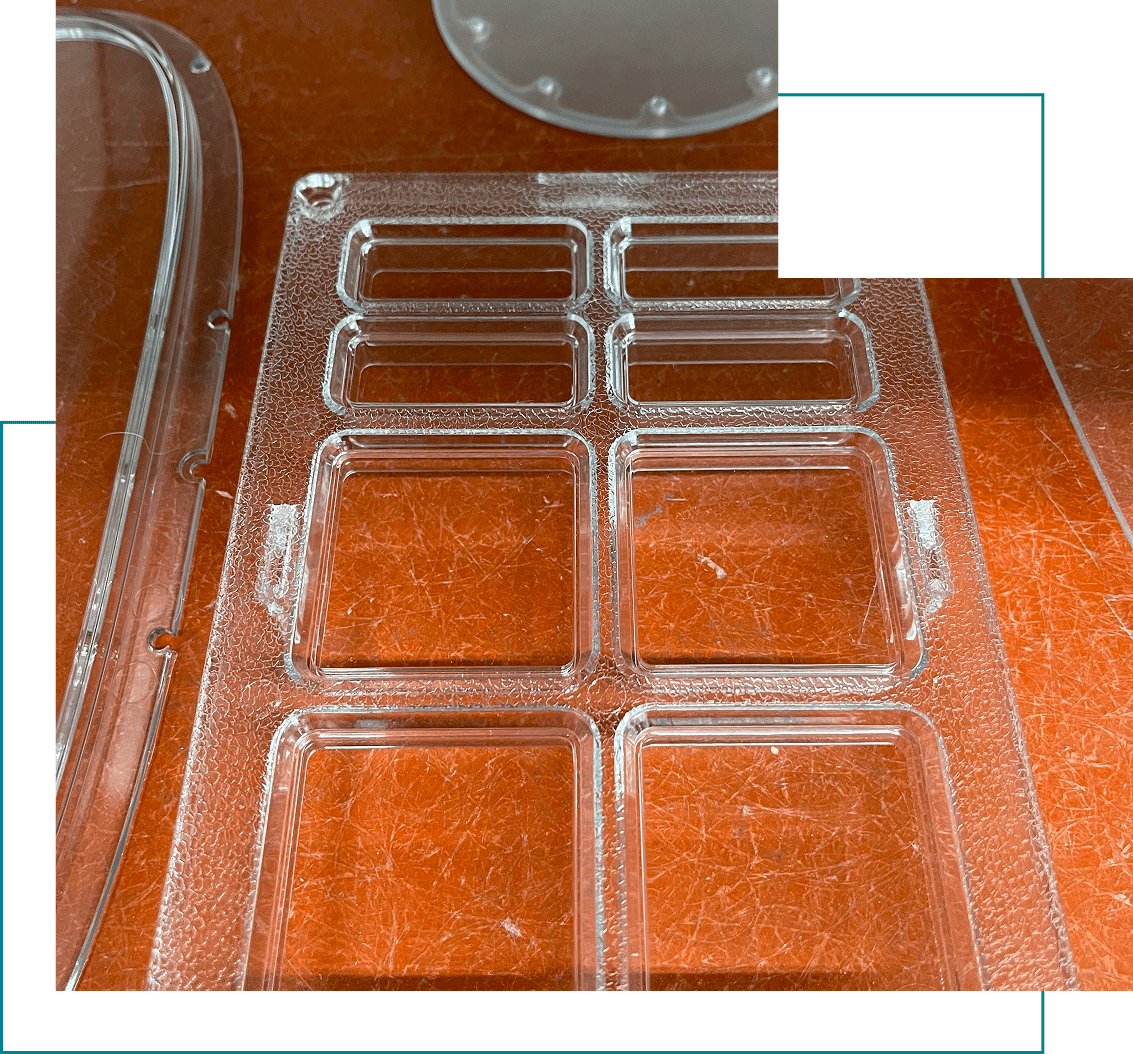
Exxene is a world leader in polymer and glass coating technologies, specializing in high-performance siloxane hardcoats and the S Series coatings designed for demanding industrial applications. We understand that materials like plastics, particularly polycarbonate, require a protective layer to prevent scratching, chemical attack, and degradation. Our coatings are thermal-cure materials formulated to produce a hard, rigid surface with a glassy appearance, drastically extending the life and enhancing the optical clarity of your critical components.
The Superiority of Siloxane Hardcoats
Our siloxane hardcoats are chemically based on modified polysilsesquioxane sol-gel, which cures into a cross-linked matrix. This process creates an unyielding semi-crystalline barrier, typically a few microns in thickness, that eliminates the scratching and abrasion normally encountered with uncoated plastics. This technology not only offers superior abrasion resistance but also exhibits excellent light transmission, actually improving the optical properties of the substrate. Furthermore, the siloxane matrix provides dramatically enhanced chemical resistance against hostile environmental conditions, corrosive agents, and compounds like alcohols and fuels. Our diverse siloxane hardcoat product line includes specialized formulas such as S-500 Weatherable Hardcoat, which absorbs UV light for exterior architectural and automotive applications, and S-30AP, a chemical biological barrier for rigid polycarbonate.
S Series Coatings for Versatile Applications
The S Series coatings represent a family of high-performance products within our siloxane hardcoat line, each tailored for a specific application need. For example, the S-25 Hardcoat is formulated to adhere to a variety of rigid and semi-rigid substrates without the use of a primer, while the S-24 NFPA Hardcoat was specially developed to meet strict abrasion and flame exposure requirements. These coatings are routinely used on cast or extruded plastic sheets, injection-molded lenses, windows, and structural housings across diverse markets, including aerospace, automotive, and electronics. All our siloxane hardcoats can be applied by various methods, including dip, flow, spin, and spray, offering flexibility in your manufacturing process.
Ready to provide your polymer and glass components with unyielding protection? Contact Exxene today to discuss our S Series coatings and siloxane hardcoats and secure the ideal transparent surface finish for your demanding application.
Optical Clarity and Chemical Resistance
It exhibits excellent light transmission and actually improves the optical properties of most substrate materials by eliminating substrate surface roughness, which contributes to reduced clarity in the uncoated state. Chemical resistance is dramatically enhanced through encapsulation of the substrate surface with the cross-linked siloxane matrix.
Silicone Hardcoats for Plastic and Lenses
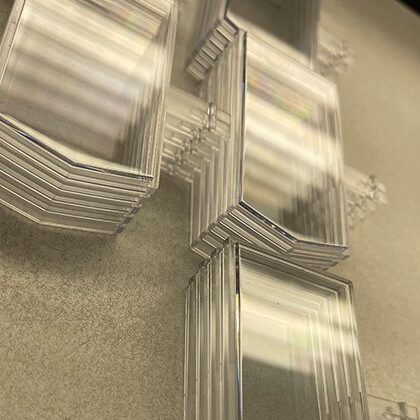
Silicone Hardcoats are routinely used on cast or extruded plastic sheets and injection-molded or cast lenses, windows, and structural housings. These coatings are especially suited for application upon extruded polycarbonate sheets and injection-molded polycarbonate lenses.
Siloxane Hardcoats
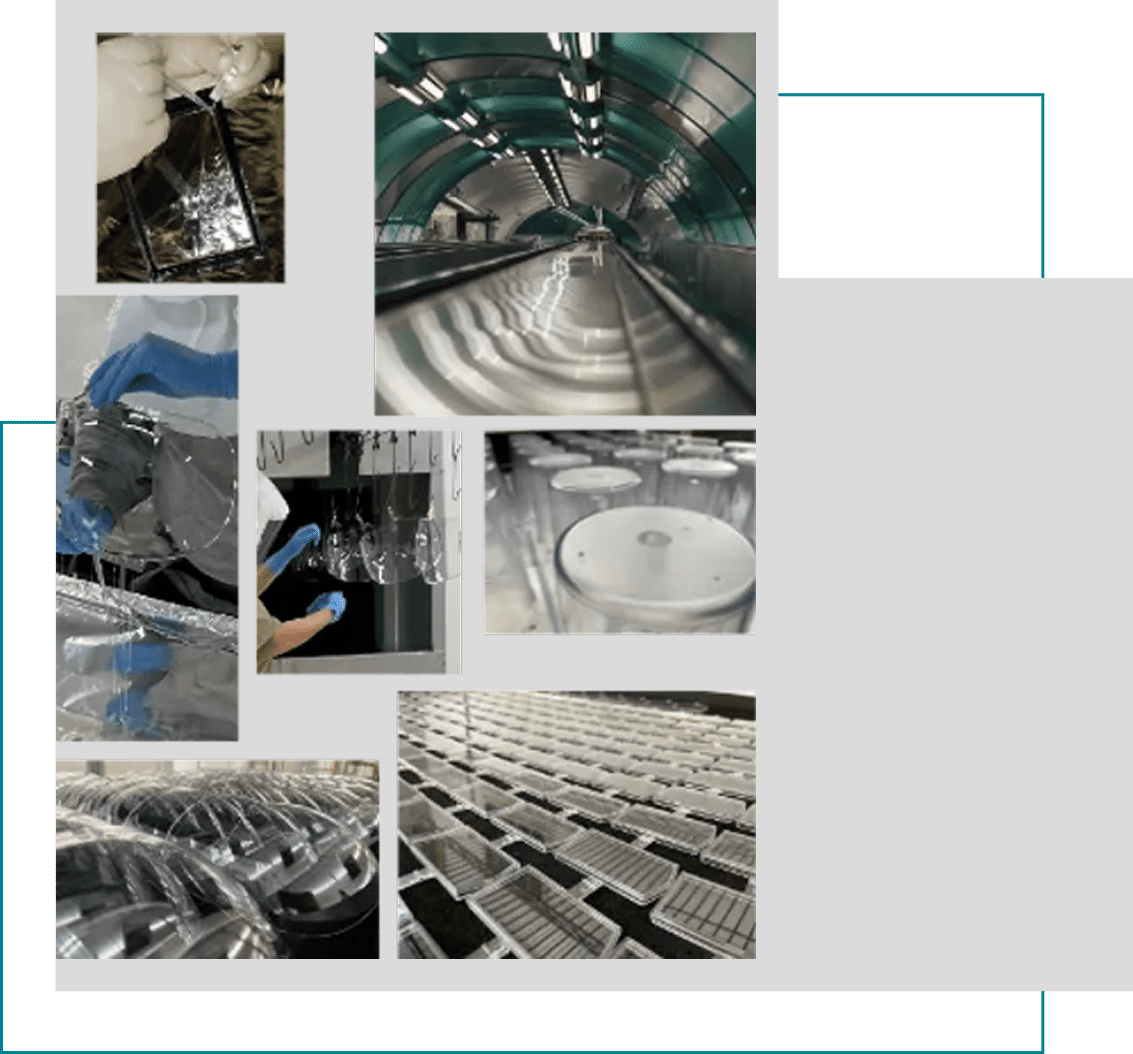
Exxene siloxane coatings are thermal-cure materials that produce a hard, rigid surface with a glassy appearance. The polymeric content consists of modified polysilsesquioxane sol-gel in an alcohol or glycol ether solution. Solutions are low-viscosity, fast-drying liquids supplied at 15-30% solids and do not require refrigerated storage. Coatings adhere to a variety of substrates, including polycarbonate.
Performance Characteristics
Silicone (polysiloxane) Hardcoat ings provide superior abrasion resistance and inertness to hostile chemical and environmental conditions. These coatings are applicable to many substrates, but the majority of applications are on nonmetallic surfaces, especially plastics.
Scratch-Resistant Organometallic Coating
The fully cured organometallic polymer provides a semi-crystalline barrier several microns in thickness and eliminates scratching and abrasion normally encountered with uncoated plastics.
Optical Clarity and Chemical Resistance
It exhibits excellent light transmission and actually improves the optical properties of most substrate materials by eliminating substrate surface roughness, which contributes to reduced clarity in the uncoated state. Chemical resistance is dramatically enhanced through encapsulation of the substrate surface with the cross-linked siloxane matrix.
Silicone Hardcoats for Plastic and Lenses
Silicone Hardcoats are routinely used on cast or extruded plastic sheets and injection-molded or cast lenses, windows, and structural housings. These coatings are especially suited for application upon extruded polycarbonate sheets and injection-molded polycarbonate lenses.
Application
Most applications benefit from the minimum film thickness required to obtain the desired abrasion resistance, with an average of three to six microns. Rigid polysiloxane layers are prone to crack or craze and may delaminate if applied in excessively thick layers on thin polycarbonate sheet.
Controlling Thickness in Siloxane Coatings
All siloxane Hardcoats can be applied by dip, flow, spin, and spray methods. Flow coating of large surface areas often requires dilution and large flow volume to limit the coating thickness and prevent cracks that originate from the areas of thicker coating.
Substrates
The plastics that are most commonly coated with polysiloxanes are polycarbonates, polyarylates, polysulfones, and polyamides/nylons. Coupling agent or primer treatments facilitate use on more challenging polymeric substrates such as vinyl, urethane, polyester, cellulosic, and polyolefin.
Temperature Effects on Siloxane Curing
Siloxanes can be cured at temperatures as low as 50 degrees Celsius; however, they require several hours at such low temperatures. Higher temperatures, appropriate to the substrate, will accelerate the rate of cure to one hour or less. Exxene Hardcoats are most often cured at 82 to 130 degrees Celsius for 20 to 45 minutes.
Siloxane Hardcoat Products
S-24NFPA
A primerless Hardcoat was specially developed to meet the abrasion and flame exposure requirements of the National Fire Protection Association on polycarbonate and polycarbonate copolymers, including PC-TMC. It can be supplied with 20% or 25% solids in isobutanol and is primer compatible on substrates not requiring NFPA certification.
S-28-1
S-28-1 is a general-purpose Hardcoat for rigid and semi-rigid polycarbonate. A primer is suggested for maximum chemical and weathering resistance. It is supplied at 25% solids in isobutanol.
FAQ
What are the main differences between Siloxane Hardcoats and standard coatings?
Siloxane Hardcoats differ significantly from standard coatings because of their polysilsesquioxane sol-gel chemistry. They create a hard, rigid, glass-like surface that offers superior abrasion resistance and chemical inertness. Standard coatings typically offer less durable protection and cannot match the high optical clarity and chemical resistance provided by a siloxane matrix.